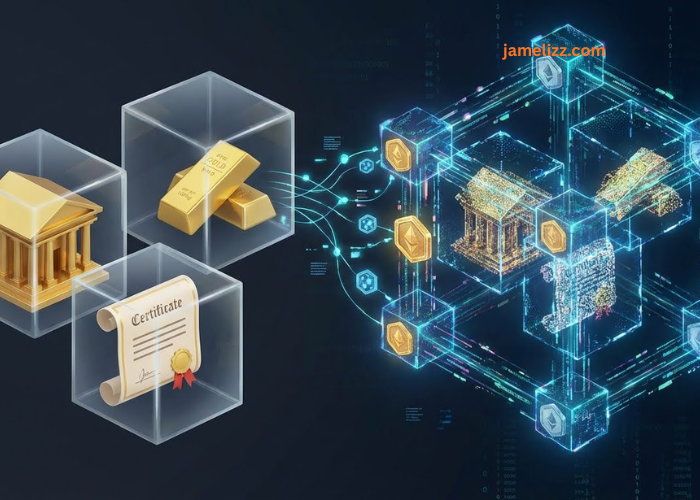
Tokenization digitizes real-world asset ownership on a blockchain, providing better liquidity and market access for both retail and institutional investors.
Investing in premium real estate or high-yield bonds often requires significant capital, creating high entry barriers for average individuals. Asset tokenization addresses this issue by converting traditional assets into digital tokens on a blockchain. This method introduces fractional ownership, faster trading times, and broader global access.
In 2026, traditional banks and asset management firms are actively adopting this technology. Industry forecasts suggest that tokenized assets could reach a value of $2 trillion by 2028. This article explores the basic mechanics, primary advantages, and current practical applications of asset tokenization.
What Is Asset Tokenization?
Asset tokenization involves taking a tangible or financial asset, such as a commercial building or a bond, and representing it as digital tokens on a blockchain. Each token corresponds to a specific portion of the asset’s underlying value.
Here is the standard process:
- Identify the asset: Select an asset with clear ownership rights, such as real estate, fine art, or commodities.
- Legal structuring: Ensure the tokenized asset complies with relevant financial regulations. These are typically classified as security tokens.
- Smart contract implementation: Use computer code to automate ownership records, dividend distributions, and trading rules.
- Market launch: List the tokens on digital platforms where investors can buy and sell them continuously.
These tokens are often categorized as security tokens (for stocks and bonds) or utility tokens.
Key Benefits of Tokenization
The integration of blockchain into asset management offers several practical advantages for investors:
- Increased liquidity: Investors can trade assets at any time. This differs from traditional markets, which are restricted by standard business hours.
- Broader access: Fractional ownership allows investors to participate with smaller amounts of capital, such as investing $100 in a large commercial property.
- Reduced fees: By automating administrative processes through smart contracts, operational costs can decrease significantly.
Key Takeaways:
- Improved transparency: The blockchain records all transactions permanently, providing a clear and verifiable history of ownership.
- Automated yields: Smart contracts can automatically distribute dividends or interest payments directly to token holders.
Traditional Asset Classes Being Revolutionized
Tokenization is being applied to several major asset classes, improving their transaction speeds and accessibility.
Real Estate Tokenization
Real estate transactions traditionally require significant time and capital. Tokenization allows a large property, such as a commercial office building, to be divided into thousands of digital shares. This enables smaller investors to earn proportional rental income. By 2026, the secondary market for tokenized real estate has grown substantially, offering continuous liquidity compared to the traditional, months-long sales process.
Bonds and Fixed Income Tokenization
Government bonds and treasury bills are increasingly moving to digital formats. The circulation of tokenized U.S. Treasuries has reached over $1 billion by early 2026. These tokens offer predictable yields that can be distributed automatically. This digital approach also eliminates the traditional two-day (T+2) settlement period, allowing transactions to settle almost instantly.
Commodities and Equities Tokenization
Tokenized commodities, such as XAUUSDT (gold), allow investors to use their holdings as loan collateral within digital finance platforms. Similarly, placing equities on a blockchain reduces settlement times to seconds. Major financial institutions are currently operating large-scale tokenized share programs, allowing these assets to be traded without the interruptions of standard market closures.
Comparison: Traditional vs. Tokenized Assets
| Feature | Traditional Assets | Tokenized Assets |
| Liquidity | Days or weeks to sell | Continuous, immediate trading (24/7) |
| Minimum Investment | High capital requirement (e.g., $100K+) | Low capital requirement (e.g., $10-$100) |
| Settlement Time | T+2 (2 business days) | Immediate via blockchain |
| Fees | 2-5% for intermediaries | Under 1% due to automation |
| Accessibility | Primarily institutional investors | Accessible to global retail investors |
| Yields/Dividends | Manual distribution (monthly/quarterly) | Automated real-time distribution |
2026 Trends and Market Projections
Industry forecasts estimate the tokenized asset market could reach $2 trillion by 2028. Surveys indicate that a majority of institutional asset managers are currently developing tokenization strategies.
- Institutional adoption: Private credit funds are beginning to tokenize large portfolio segments.
- Stablecoin integration: Stablecoins are frequently used as a bridge to facilitate easy conversion between traditional fiat currencies and tokenized assets, drawing inspiration from the seamless liquidity and trading experience of a typical Bitcoin USDT exchange.
- Regulatory pilots: Various regions, particularly in Europe, are launching compliant platforms to test secure international trading.
Challenges and Regulatory Landscape
While the technology offers clear advantages, it must operate within existing financial regulations. “Programmable compliance” helps solve this by embedding regulatory rules directly into the token’s code, ensuring transactions meet regional standards (such as SEC requirements). Furthermore, regular audits of smart contracts and secure custody solutions are necessary to protect investor assets.
- Regulatory progress: Updated guidelines in 2026 are providing clearer paths for issuing and trading security tokens.
- Technical tools: Blockchain oracles are used to supply accurate, real-time pricing data for tokenized assets.
Conclusion
Tokenization combines the structure of traditional finance with the efficiency of blockchain technology. By lowering entry barriers and improving transaction speeds, it provides new opportunities for a wider range of investors to participate in global asset markets.
Frequently Asked Questions
What are the main benefits of real-world asset tokenization?
The primary benefits include increased liquidity, fractional ownership, and process automation. This can significantly reduce transaction costs and allow investors to participate with smaller amounts of capital.
Which asset classes are most tokenized in 2026?
The most frequently tokenized assets include government treasuries, corporate bonds, real estate properties, and various commodities.
Is asset tokenization regulated?
Yes. Tokenized assets usually fall under the category of security tokens. They are subject to financial regulations, which are increasingly managed through programmable compliance within the token’s code.
How do I invest in tokenized traditional assets?
Investors can purchase tokenized assets through specialized, regulated digital exchanges or platforms that offer tokenized funds.
What is the future market size for tokenized assets?
Financial forecasts predict the market for tokenized assets could grow to approximately $2 trillion by 2028, driven largely by increased institutional adoption.